We have broken the climate. The world is on fire. Rivers dry up. Glaciers collapse and destroy towns. I fear for the topsoil. I fear for the famines. I fear for the people. And every new day will bring its Grace and I can enjoy the world for what it is.
My bicycle is in the shop. The chain had been skipping and also wrapping around the main cog. For $20 I replaced the chain myself, but the problem persisted. I enlisted the fine minds at the bike shop. The two bigger cogs on the crankshaft are worn out, and given the nature of how it is built, they need to replace the crankshaft. Can I do it myself? Installing the crankshaft is easy, but removing the crankshaft involves a special tool. I’ll leave it to the experts. Officially, it will be done in three weeks. Unofficially, based on prior experience, I wanted to believe three days but not everything I want to believe comes to fruition.
As far as my Garmin Watch is concerned, my exercise is whenever I track a bicycle ride. Since I am not tracking bicycle rides, Garmin has declared me a slothful, indolent creature, detraining at an exercise load of zero. Yeah? Well. I do feel a little crispier than usual about the various frustrations that come along at work!
A thought comes around: purchase a spare bicycle? As a good suburbanite family we own three cars. (The old gas minivan earns its keep a few times a year on behalf of the Scouts.) Two bikes is not so extravagant. But I’d want to kit it out with tough tires and something that can hold a backpack. Out the door for under $1,000? I met up with the Bike People the other night. Everyone has a spare bike, and the warning I anticipated: because you have a spare bike there’s no pressure to get it fixed up until your main bike needs service and now you have two bikes you can’t easily ride! Yeah I kinda figured.
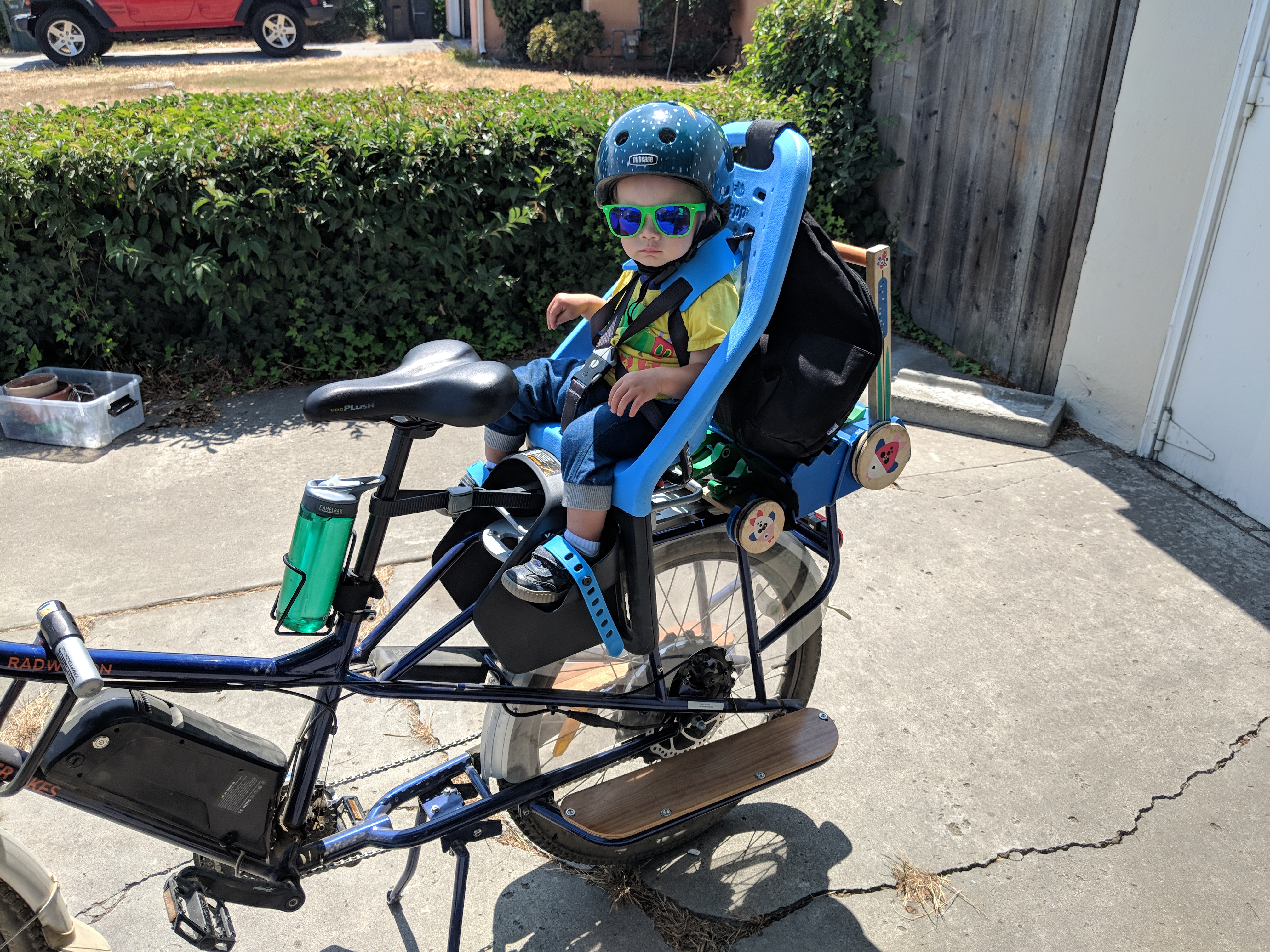
Six years ago: the younger child waits for the daycare commute in his bicycle seat on the Blue Bike I Gave Away to Free Up Garage Space.
And I do have a spare bike: the big red cargo bike. But since I’ve coaxed the youngest into pedaling himself, the big red cargo bike has become a big red shelving unit in the garage that requires some “garage cleaning” to become rideable, and for the effort I get to pedal a truck of a bicycle.
And of course, you gotta check with your spouse. “I thought you already had a spare: that blue one?” “I gave that away to free up space.” So, I guess the spouse had already mentally budgeted a spare bicycle. A new pedal bike would still consume less space and weight than the old RadWagon did.
Really, I gotta find someone who wants an old bucket e-bike.
They say “infrastructure is code” – the DevOps Mantra. I say it myself.
I don’t call myself DevOps. (My employer does and I don’t argue with a paycheck.)
I write code to manage infrastructure. I am a DevOps Practitioner.
But …
I am large.
I contain multitudes.
I call myself a Systems Administrator.
Because, really:
Infrastructure is computers
Computers are largely code
Computers are more than code
There are cables and latches and screwdrivers involved
Infrastructure is also power, network, site planning, service agreements, security standards and processes and audits, recruiting, staff training, on-call schedules and standards, vacations, physical and mental health, procurement, shipping, payments, budgets. Infrastructure is so much more than code.
(On my current team we also advertise: Engineering Support services, Information Technology services, Audio-Visual services, Bicycle Maintenance, and Wildlife Removal. Multitudes!)
Infrastructure is not code; Code is infrastructure
And yeah you need to manage infrastructure resources effectively. Managing the code infrastructure means source control, automated tests, validation, pull requests, managing build/deployment infrastructure, &c.
There are cloud-only DevOps who wash their hands completely of the physical realm. All hardware is just an API. Good for them. They seem to spend a lot of time in meetings.
This is what you might see one day if you are a server who has been having an especially rough time.
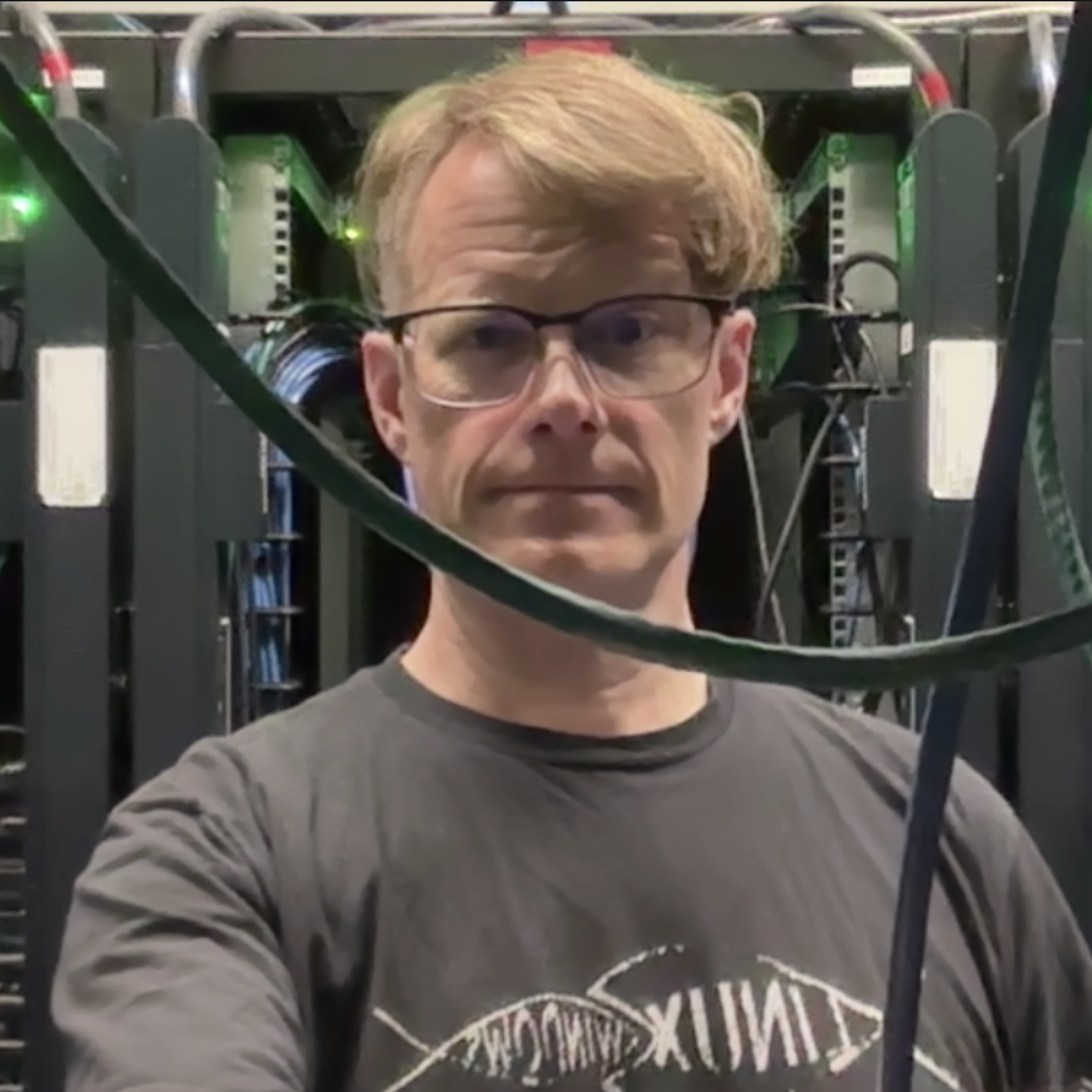
For me … I’m a “full stack” engineer. Maybe I’m a full rack engineer. I have, in my career, managed most of the infrastructure components listed above. I’m grateful to work on a growing team that allows me to focus somewhat.
I keep a broad lens.
I enjoy managing infrastructure with code.
That frees up time and attention for the rest of the adventure.
I had some errands to run so I ran them on my bicycle.
The ride up to OfficeMax was uneventful for the most part. In Mountain View, El Camino has a mostly very nice protected lane. At one point where the protected lane becomes a dashed green mixing zone, a Tesla tried to merge into me so that they could make a right turn. It was slow enough that I just yelled and yelled and yelled until they stopped. Something like “HEY HEY HEY HEY HEY!!!!!” I saw everything happening and didn’t feel endangered. When you’re riding on the street, you ride with hyper awareness.
Along the way, I also managed to share a thumbs down with a Nazi-era Tesla, and even flip off the cyber cab. You know: a great ride.
An intense ride to fulfill a dull mission.
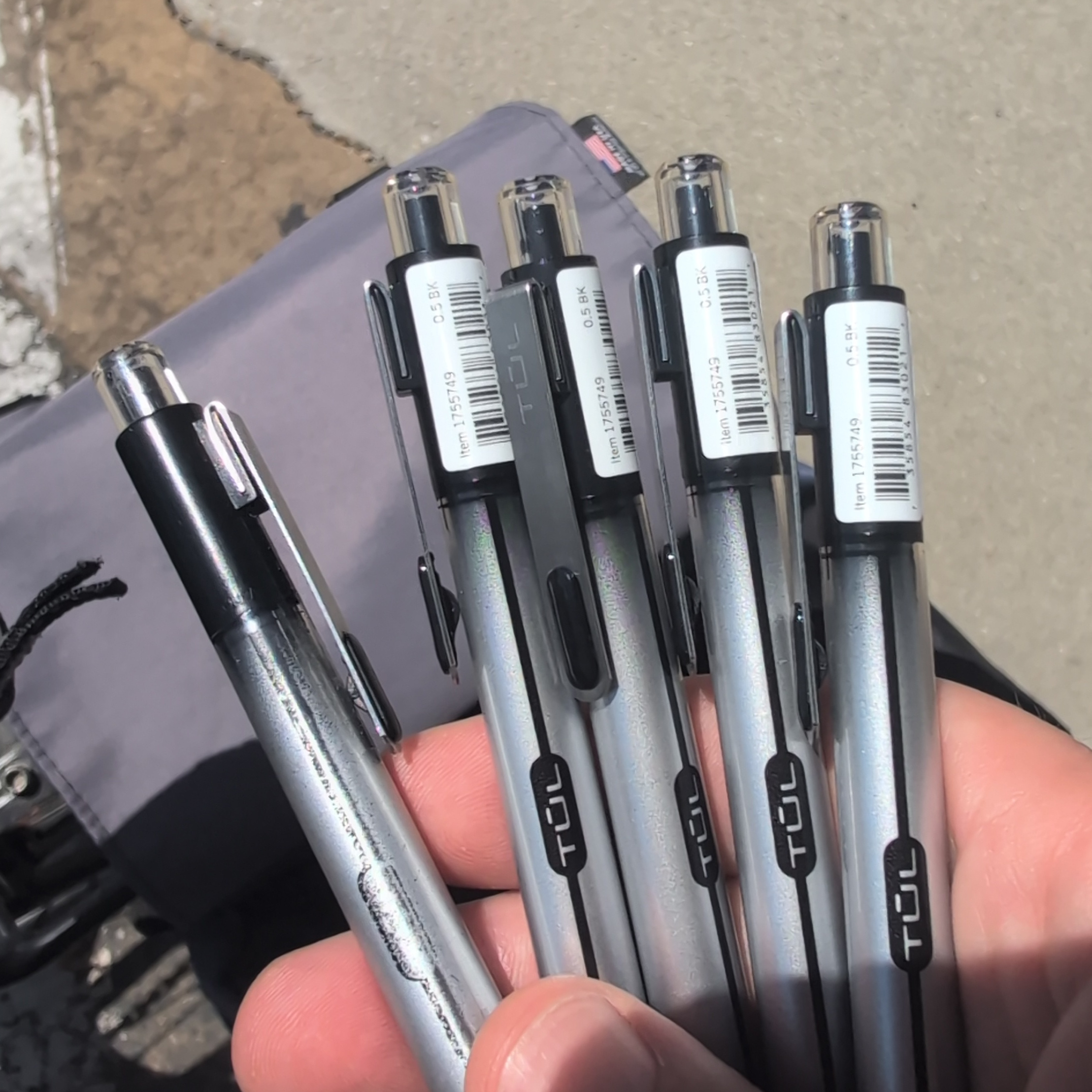
I found the pens I wanted to buy. My current favorite is a Tul fine point gel. Specifically, the fine point gel pen they sell near the register for $1.70 versus the fine point gel they sell from the pen section at 4/$10. What’s the difference? No idea! But the one in my pocket looks like the cheap ones so I stick with a winner.
Next stop was Best Buy, just where the protected bike lane ends at the Sunnyvale border. I returned a hard drive the younger son had wanted, but which proved incompatible with their frankensteined donated Linux gaming rig.
I decided to take El Camino Real just in case I saw something tasty for lunch. Normally I would not ride my bicycle on El Camino Real in Sunnyvale, because there’s no bicycle infrastructure. It is a grim place to ride. But I felt it was my right.
I took the right lane, as one should. This ensures that I am highly visible, and my behavior is consistent versus riding along in the gutter and weaving into traffic whenever there’s a parked car or other road hazard. Right away, I heard honking in the distance. It was a blue Tesla purchased since Elon did his Hitler salute. The driver for which I have the least empathy. He got closer and honked some more. So I stopped. In front of him.
“Go around!” I gestured.
He put his hands up in frustration. What is going on here? This bicyclist is telling me to use one of the other three lanes of traffic!?
“Go around!”
“Go.”
“Around.”
“Fricking Nazi,” I mumbled as he merged into the next lane and I resumed pedaling. He turned right two blocks down, heading for an apartment building. For the next few lights I noticed the same gold-colored car following me. I was glad because it meant that in traffic, and with a shot of adrenaline, I am just as fast as any other car in the right lane. I sped right past The Greek Spot which I had had in mind. I was too full of speed to make room for gyros.
A Cadillac SUV honked its horn as it passed me in the next lane over.
“Fricking Slowpoke” I yelled as I rode past their open window, turning left at the next red light.
I cruised up to a four-way stop, and someone in a minivan who had the right of way tried to wave me through but within half a second realized that they would pointlessly hold up waiting traffic. I was proud of them for their awareness. They went on their way, and I resumed pedaling.
At Evelyn, near Murphy, as is often the case, some poor rideshare driver was waiting to do a pickup in the bike lane. As I do so often, I rode up to their open window, and at the volume of a bicyclist accustomed to conversing with automobiles on busy roads, explained to them that this was a dangerous situation, and that there were several parking lots and loading zones adjacent to where they were sitting. They politely agreed as I yelled “thank you for your cooperation” pedaling away towards home.
I arrived home wearing a sheen of well deserved sweat. A great ride! Time to settle in to a quiet Sunday afternoon.
A theme I experienced yesterday is the human need to make.
Justo reached into his pocket and gave me a bracelet. Orange and black, woven tight from plastic bags — the ones the men inside Alligator Alcatraz repurposed with their own tired hands, because human beings will make something out of nothing if you give them nothing long enough. They make them for each other. They make them because making something is the one thing a cage cannot take from you.
You can read about Justo Betancourt, and how our government forced suffering upon him and continues to force suffering on our “unwanted” people. The barbarity and cruelty is sadly familiar to any American who is paying attention. We each resist in our own ways. We each must maintain our own sanity.
Sam Hamper has a very nice video about how he likes to sketch things, not in order to produce content, but just because the process of paying attention is gratifying in itself. You don’t take a walk to achieve something: you take a walk because it is something you need to do. Similarly, spending time observing things is something you need to do to feel whole and human. He notes that attention is rated as a most valuable “commodity” these days, and that you don’t have to sketch to focus on the moment: but sketching is what works for him.
I likened his sketching to taking notes at a meeting. I don’t usually take notes. Most meetings I tend to be checked out. When I do take notes, they are rarely useful beyond the moment, but the habit helps me focus my attention on what is happening. Some meetings I care about.
There’s a larger thing afoot with AI. I find it to be one of several handy tools in my day job: how do I correctly iterate through a dictionary list in this context? Other folks use AI to do the job of junior engineers. That sounds powerful but lonely. I believe that if you’re going to mentor something to do the work, empowering a human to grow is amazingly gratifying. I doubt work styles like mine are going to be replaced overnight, if ever, but … as a 50 year old tech worker, I have lately taken an interest in hand tools.
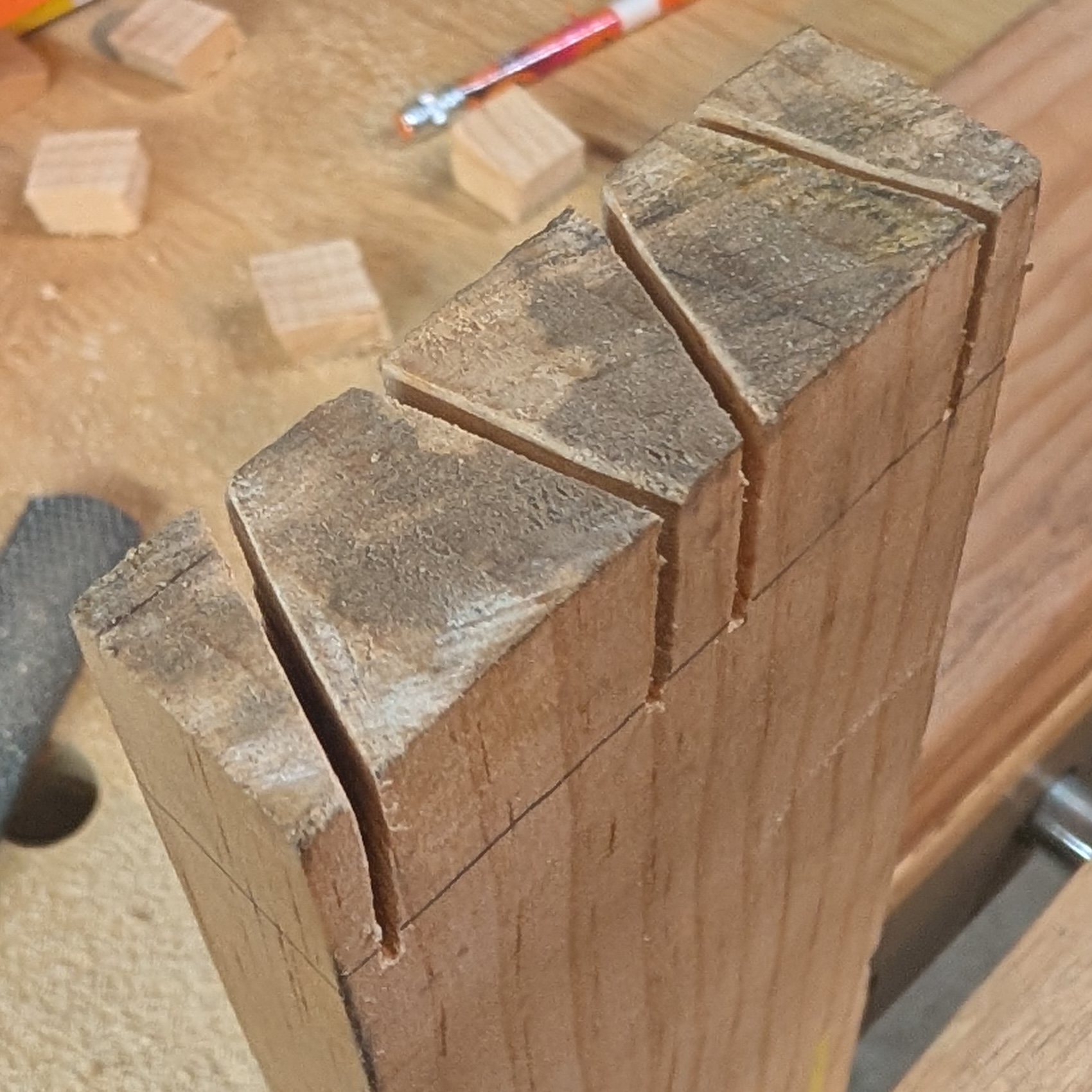
Watch Rex Krueger explain how to plane a board flat. You could run that board though a pair of machines or a table saw lickety split. But there’s something enjoyable about the process. Maybe. But you have to get the right tools and you have to make them sharp. What I did manage last night was to practice sawing into the end of a few boards at an angle. I am a couple of chisels away from attempting a dovetail joint. For practice. To see if I like the process.
Surprisingly not as scary as vi. I doubt the rest will come too easily.
I have a modest collection of power tools, but the hand tool thing feels “Unixy” to me: a collection of small tools that aren’t without a learning curve, but with a little practice you can get up to speed and enjoy the work of building useful things.
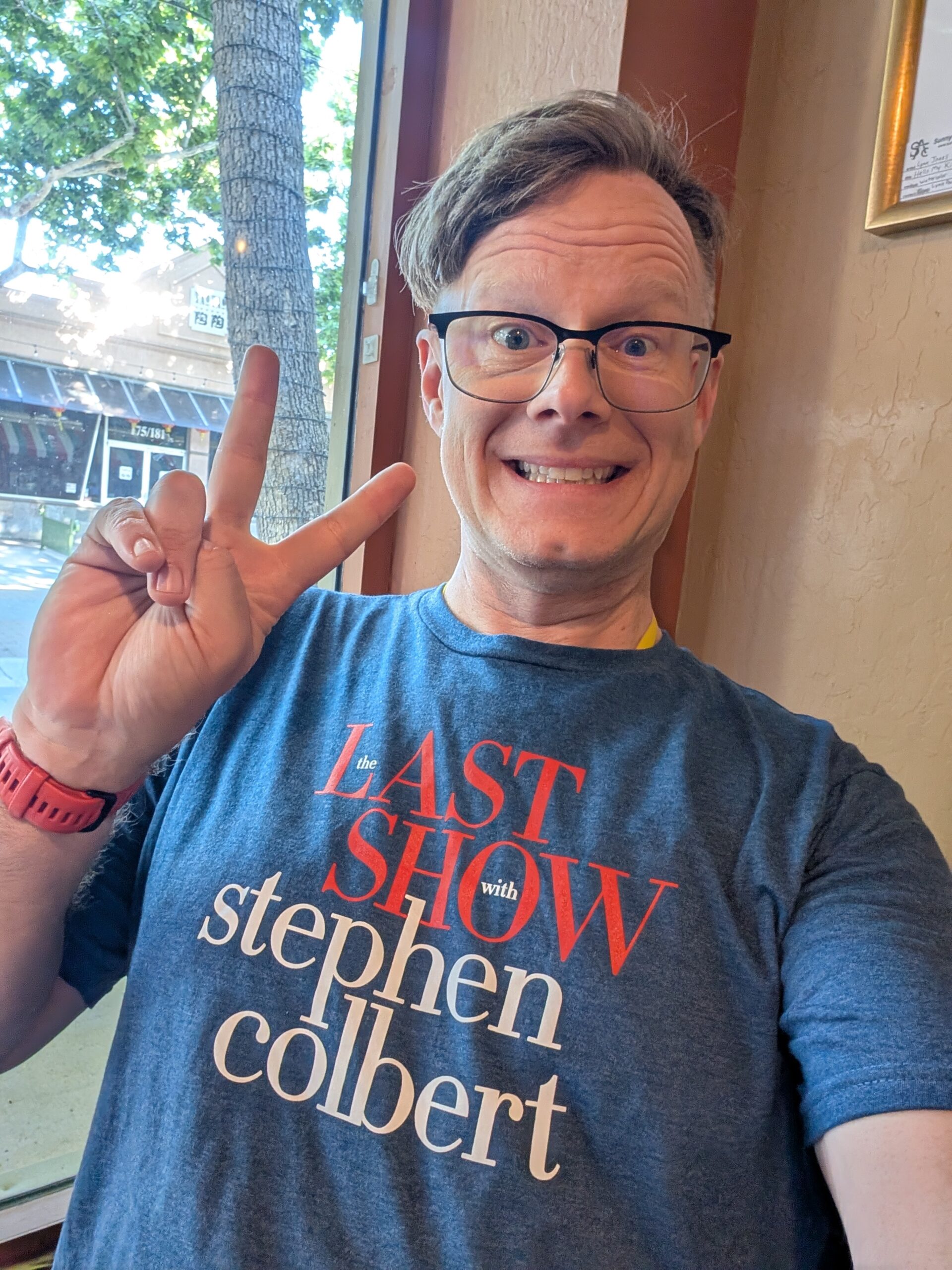
Tonight is the last night for The Late Show with Stephen Colbert. I’ll watch it tomorrow on Paramount+. I canceled my annual subscription, which would have renewed in early June.
I never used to be a late night TV watcher. It is a nice format, though. Especially when the news has become such a grind. A friendly face samples the day’s crimes, chews a few bites into a bolus of rage, breaded in wry humor with a tangy glaze of hopeful frustration, and pops it down my exhausted, slack-jawed maw. Between All the Star Treks and Stephen Colbert, the Paramount+ subscription made sense for me. But I have watched All the Star Treks and tomorrow I will have watched All the Colberts.
Thank you for the past decades of entertainment, Stephen Colbert! I am going to miss you!
Here’s my gripe with how the show has been distributed. I’m not staying up late to watch. I’m not sure I can even get CBS on my antenna. I know we do get NBC because I “stay up late” to watch Saturday Night Live during the national broadcast at 8:30 pm Pacific. If late shows did that … I mean it is pre-recorded anyway … maybe just post the episode to the paid streaming service at air time?
… I wait until the next day. But why, as a paying customer of Paramount+, can I watch clips of the show on YouTube for free tens of hours before I can watch the show on Paramount+? Why the delay? Why? And what I would really really have enjoyed, since the show on Paramount+ has no commercials, why not let me hear the band play through the breaks? I assume that was a hassle with potential royalties if they played covers. “Move On Up” …
On Monday, they did at last let the band play on, by posting a full, un-cut episode, which you can watch for free … on YouTube. The band improvised and jammed and it was wonderful:
Oxide.computer will sell you an on-premise cloud. Type some commands into a great big computer and it will build you a network of smaller computers inside the big computer. That is an exciting idea for an old Systems Administrator like me.
Oxide recently shared their internal guidelines on using AI. Good stuff here. The LLM Anti-Patterns are especially decent: don’t mandate that anyone use LLMs, don’t shame folks who do use LLMs, and, this shouldn’t need to be said: don’t date your LLM!
What Oxide advocates is responsibility. An AI is a tool to build things. What you build represents you. LLMs can generate code very effectively, but that needs to be code you understand and vouch for. Because, at the end of the day, it is your code and you are responsible.
It is all too easy to ask AI to take away your responsibility. When the cartoon or the video clip or the email was obviously penned by an AI, we can tell you aren’t representing yourself. Is your audience not worth your time? Worse: do you feel unworthy of being yourself? We can’t see you through the slop!
At the other end are the “never AI” folks. On Mastodon I see posts float by from people who grouse every time an Open Source project reveals that it will leverage AI to expedite the unrelenting work of building, reviewing, debugging, shipping, and supporting free code. Surely, some projects will incautiously ingest “vibecoded” AI Slop, but in general, Open Source maintainers are passionate and responsible volunteers conscientiously leveraging new tools to deliver a better service to their community. We owe these folks respect and good faith.
Use the tools. Or don’t. Both choices are correct. The wrong choice is to be the tool, by letting the tool be you. Having a “relationship” with your AI is a sad move, and expecting other people to have a relationship with your AI’s slop is disappointing and creepy. Step away from the keyboard and spend some time with a kindred spirit. Head outdoors to feel the sun and the cool breeze tango with each other across your skin. You are too beautiful and too precious to be outsourced to a GPU farm.
NOTE: in the spirit of exploration, I sought feedback from an LLM, “Kimi K2.5 (reasoning)” on how to make this post more readable and engaging. It suggested some early revisions to this post, but every word remains my own.
Tagging a bug “Won’t Fix” doesn’t mean it isn’t real and it doesn’t mean nobody noticed; it means the cost of fixing it exceeds the benefit, or the fix would introduce worse instabilities elsewhere, or the system has already built so many dependencies around the bug that it’s become, functionally, a feature. Every codebase of sufficient age accumulates these. They’re documented, acknowledged, and largely left alone so the engineers can go build something useful.
Note (and this is important): you are a codebase of sufficient age.
[…]
Won’t Fix is the practice of questioning the specification. Most of the things you’re trying to fix about yourself are only problems relative to some imagined ideal of a person you were never going to be. Your distractibility is a bug in the “focused knowledge worker” spec but might be a feature in the “person who notices interesting things and connects them unexpectedly” spec. Your sensitivity and your stubbornness, your tendency to monologue about niche topics at parties: all Won’t Fix, and all load-bearing, and all probably okay in the big, heat-death-of-the-universe scheme of all things.
I remember a quote I can’t find, the gist of which was that “prior to the advent of modern psychology, people’s personality disorders were just their personalities.” Older folks are unlikely to “rewrite” their core functionality, but you can tweak around the surfaces of the system to ensure better compatibility. We can also learn not to take other folks’ unintuitive quirks personally.
I have long noticed that I am interested in things for somewhere between three days to three months at a time before my interests move elsewhere. The light of my attention blinks in and out, so I try to bring it around like a lighthouse in hopes that the various ships can course correct before they crash into the boulders.
Anyway, even if you’re not going to rewrite your Being from scratch, you can always work at experimenting with new features. I know some folks like to try a new idea for a month at a time, and evaluate whether this new could-be habit is worth trying to perpetuate. One month is a decent time to road test an idea and also to begin forming a habit, if that is a habit you want to have.
There is a cloud of dread I can sense in the Bay Area. A shadow ahead of the Super Bowl, which will be hosted this Sunday a few miles from my house. Today it was the “nuke sniffing helicopter” zig zagging around a colleague’s house. Another friend reported that their car was searched by dogs on the way to the UPS store, as they live near the stadium. There’s a general dread of ICE and a surge of Federal Law Enforcement conducting raids while they are in town for game security. Now there are reports of pro-ICE billboards having gone up in San Francisco.
Today I headed home from the office not long after lunch, as I had some tasks to complete at the datacenter. I returned to the office for a spell because Caltrain was effectively shut down. I recognized a familiar pattern: delay due to police activity and single-tracking at the two stations in Palo Alto. I dreaded what that meant: another young person had succumbed to the worst decision they could make. The dread was later confirmed via Reddit.
Keep your eyes open for your neighbors. Ask for help when you need it. Be kind.
I heard that with the Super Bowl coming to Santa Clara, we could expect a rush of federal Law Enforcement, so I signed up for Santa Clara County Rapid Response Training. That was my Saturday morning. A room full of volunteers and a word at the start that an observer had been murdered in Minnesota the same morning. We learned a bit about how ICE has been functioning locally, and how Rapid Response works. We signed up.
Back to the house and switch to the minivan to schlep the Pinewood Derby track over to the Pinewood Derby. “Have you seen the video?” “No, and that’s just as well.” I helped set up the track, then excused myself. “I am crashing. I need to eat.”
I ate and then climbed into bed. I rested but couldn’t nap. I missed most of the Pinewood Derby. I had just run out of energy. Not a physical thing so much as a state change. National despair. I can’t explain it but there’s a good chance you understand.
I caught the tail end of the Pinewood Derby, helped pack up the track. I stopped at Trader Joe’s for some non-alcohol Hazy IPA. The Family had eaten at The Derby. I dined on candy and fake IPAs for dinner. I don’t recommend that. But that’s a Sometimes Saturday Night. We watched Saturday Night Live. No mention of Minnesota and I understand why.
Come morning I couldn’t sleep. I really like to sleep in when I can. That’s what Sunday is for, right? I got up and went to the computer. The letter E in 700 point font. Two of them. And N, D, I, and C. I taped up the old sign: END ICE. I dressed warm and headed out.
Around the corner a guy walking his dog encouraged me to be a dumbass and go get shot by federal agents. He seemed good natured about it. I walked down to the crossroads where other protests have been held. A few cars tapped horns quietly in the residential neighborhoods but as I got to crossing the streets of the main intersection over and over, many enthusiastic honks. Kind words out of windows. Hand gestures of solidarity. A ride share driver pulled over and handed me a can of Red Bull. Another man, who looked a little like a priest, beckoned me over. He had an orange juice, a Kind Bar, “a chocolate milk, for later” and a $10 gift card for the coffee shop. He thanked me for what I was doing. As a son of immigrants. Rene nearly brought the tears to my eyes.
I did my thing for about two and a half hours. My first solo protest. I think organization is generally a better thing, but when people start coming out spontaneously, the mood has shifted. I didn’t mind being alone. I wasn’t. Most folks saw past me but plenty knew that I was there for them. We don’t want to live in a country that is ruled by Fear. I don’t want that for my boys. I really want my country to be that special place where people come to escape Fear, and for opportunity. Death in the streets is nothing new, but blessing Federal Police with power to murder people at their own discretion? I can not live with that.
Walked downtown for brunch. On the way home a lady asked if there was a protest. “It was one guy,” I said. She pointed me out to the kid as an example of a good person. What made me good, in my book, was heading home to plan out and run a Den Meeting for the Cub Scouts. We talked about pets, but mainly we enjoyed being kids together.
When this post is published, I am fifty years old.
Go me!
Thanks, Mom!
This website is about thirty years old.
Go World Wide Web!
Thanks, Sir Tim Berners-Lee!
I have spent just over half my years in California versus Illinois. It is where we raise our kids, and where we own our home. Chicago and the Midwest will always hold a special place in my heart, but I have become one of those sunshine people who are just an earthquake away from sliding into the ocean.
Go Bears!
Thanks, California!
Our marriage, like our older kid and our mortgage, not to mention our cats, and my current job tenure, are all just over a decade old. (And the younger kid is closing in!)
I recently heard it said that your first decade is the happiest. But my forties have been really great as well. What makes a good childhood — being surrounded by loving people who support your growth — can really come back to you when you work to be a good spouse, a good parent, a good friend and a good citizen.
Buddy Guy started Down South, picking cotton, as his ancestors had done for too long. He loved playing guitar and made his way up to Chicago. Worked a long time to get The Industry to dig his sound. Got some help from the English, who were more directly inspired by and keen on promoting Guy’s rawer, more energetic style of Blues.
About twenty years ago my father came to town to re-wire the recording studio he had wired up decades previous, and they put him on the guest list at Buddy Guy’s. I joined him and his wife and we listened all through the night, moving from standing around the perimeter, as is common in Chicago blues clubs, to sitting at a table once the crowd thinned. There was a blind organist that Dad’s wife had grown up listening to. It was a long loud night. Afterward we piled into Dad’s car. The wife wanted popcorn shrimps, so we cruised through the night to a stand that sold popcorn shrimp in paper bags.
They had the original Charlie Brown Christmas on Apple TV, which is a sweet little thing I re-watched with the family. But you know what is a Christmas Movie we had never seen before? Die Hard! You know? That is an amazingly great movie. Another perfect action movie. If you haven’t seen Die Hard, go for it. You needn’t wait for Christmas.
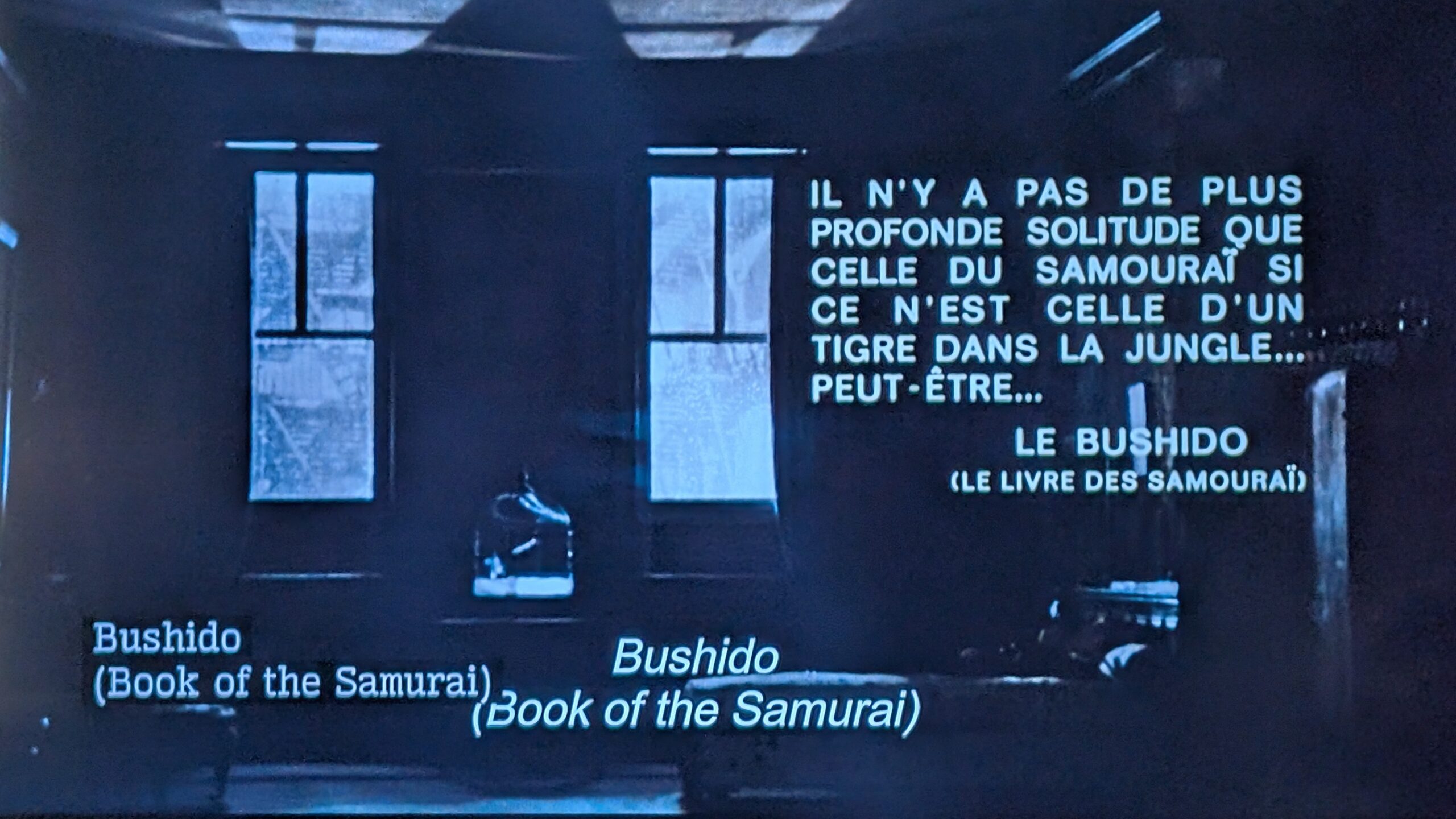
Ghost Dog: The Way of the Samurai
Because it was referenced in “Americana” and because I remember enjoying it decades ago … once upon a time, a mafioso saved the life of this weird kid who was into Japanese culture. In the present day, that kid, now a grown man, lives alone on a roof with pigeons, working hits for the mafioso, His Retainer, in the spirit of the Samurai.
A gimmick in the film is when he chats with the Ice Cream Truck man, who only speaks French. They each speak in their respective languages, arriving at the same conclusion. This probably illustrates something relevant about perceiving the world beyond the limits of language. It is a fun movie and I’m glad I watched it again.
The Samurai is a way that is no longer followed, and the mafia in this movie also understands that it has lost its spirit and is also on the way out. Ghost Dog came out in 1999, when the world was changing quickly into the Brave New Digital World of today. It feels like every day, I see a bit more value in bringing back some Older Ways.
Le Samouraï
A loner hitman lives upstairs with a bird. He is very careful about his work and covering his tracks. He steals cars with ease. License plates are swapped. When a female witnesses his work, he takes no action against her. His client turns violently against him. Ghost Dog clearly drew some influence from this 1967 film, where everyone speaks French.
The Cops feature more in this film. Dogged Big City Cops. The boss detective is trying to pin the protagonist down: his alibis are too perfect. But the beautiful piano player lady swears absolutely, this is not the guy.
There’s a lot of hide and seek on the Paris Metro. And vintage French cars with headlights so dull that every not-young person would swear “aha! they have gotten so much brighter!” The plot is engaging, but the movie tends to drag a bit, in my esteem. Yeah, you’re doing a Noir crime chase but a lot of the scenes loiter too long in the dark.
I also learned that the 1967 Paris Cop term for a surveillance bug is “walkie talkie.”
The Apartment
This was playing at Alamo, but the online seat selector said there were no good seats to be had and the weather was crap so I pulled this up on Fandango at Home. 1960s Manhattan. A guy works on the 19th floor of an insurance company: a vast open sea of desks crammed together beneath a ceiling of fluorescent lights. But he has a scheme to advance his career: he makes his apartment available to executives who need a place to bring their mistresses for an hour or two.
This, of course, is a logistical hassle and often a great inconvenience. I like his apartment. Pre-war. Cozy. Nice architectural details. An air conditioner and a pathetic kitchen. Anyway, he has a crush on the Elevator Girl and as his prospects improve so to does his confidence in courting her. Of course, she’s working through her past(?) fling with The Big Boss … long story short, the protagonist comes home to find the Elevator Girl in his bed overdosing on pills. The neighbor, a Doctor, helps save her life and counsels that he needs to closely monitor her recovery.
It was a wonderful movie. Suspenseful and humane. One scene that caught in my attention is earlier when he’s trying to impress her by explaining “I know everything about you. Where you live, your family …” and he explains that he pulled her policy card to learn more about her. She takes this creeper news in stride. Either folks thought somewhat differently about privacy and ethics back then or we’re being told that her standards for decency in men have been lowered below the horizon. Point being that it can be really hard in New York to sort through all the ambitious young men and distinguish the ethical lapses of the over-eager from the bald lies of the truly rotten.
The Hospital
After “The Apartment” Fandango suggested “The Hospital.” Another hectic Manhattan workplace in 1971: a busy teaching hospital. The protagonist runs the place. The hospital is a giant complicated mechanism of endless headaches and his life and mental state are both badly on the slide.
There are people picketing outside because the hospital’s expansion plan requires the demolition of tenements across the street. At one point they have a meeting with the protestors and everybody wants something else. I have experienced enough public meetings to know that scene. Oh and it seems that maybe the medical staff are being carefully murdered.
Pairs really well with The Apartment. This time, the workplace affairs are conducted in broom closets, or, when a patient dies, in an empty bed in a room shared by a comatose patient. Young Doctors have no time for the shenanigans of Insurance executives.
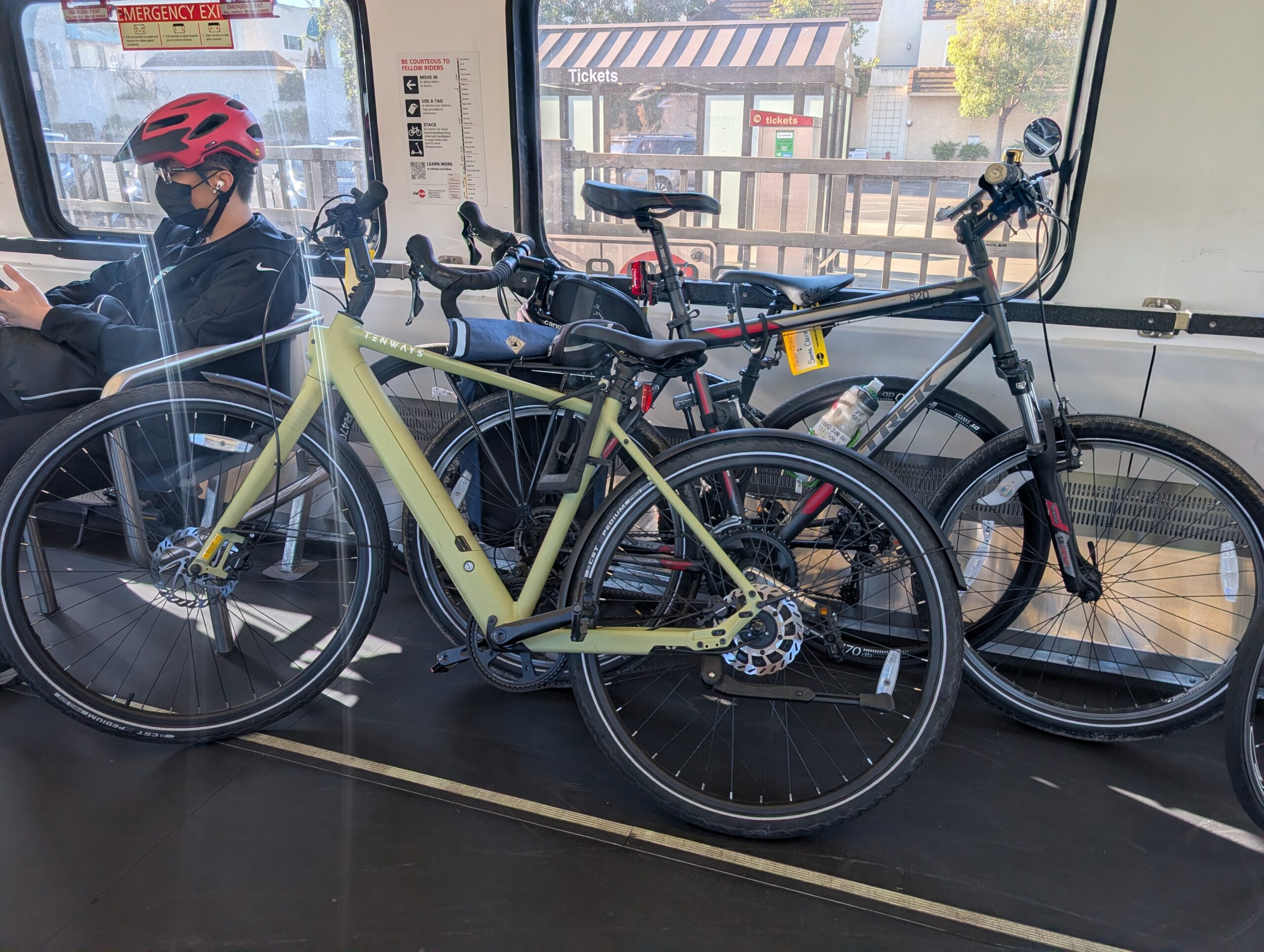
Whether you gauge the temperature with an F or a C, 40-something is nasty. That’s what we had this morning. I rode my bicycle as far as Caltrain, and figured that I could dress better, but I could just as easily hop on the train, in hopes of decent afternoon weather.
Casually sloppy: all these bikes are just riding to Palo Alto.
Today was also our “End of Sprint” which is weird becauce every other Tuesday feels like a Friday? Whatever. I had things pretty well wrapped up by shortly after 3pm, and announced I would head home.
“When you bike home all the way, how long does it take,” asked a colleague.
“I dunno: about an hour? Google says an hour. But I can just ride as far as I feel then hop the train.”
I got outside into around 63F and it was amazing! So, I started to pedal, not towards Caltrain, but home. And not in a very straight line: I had time to meander. A new hobby the past couple of years has been wandrer.earth, where I gradually fill in the map with places I have walked and biked. I pull the phone out, stick it in the handlebar mount, set Wandrer to full screen, and work my way towards home, favoring “red streets” where it doesn’t know I have been.
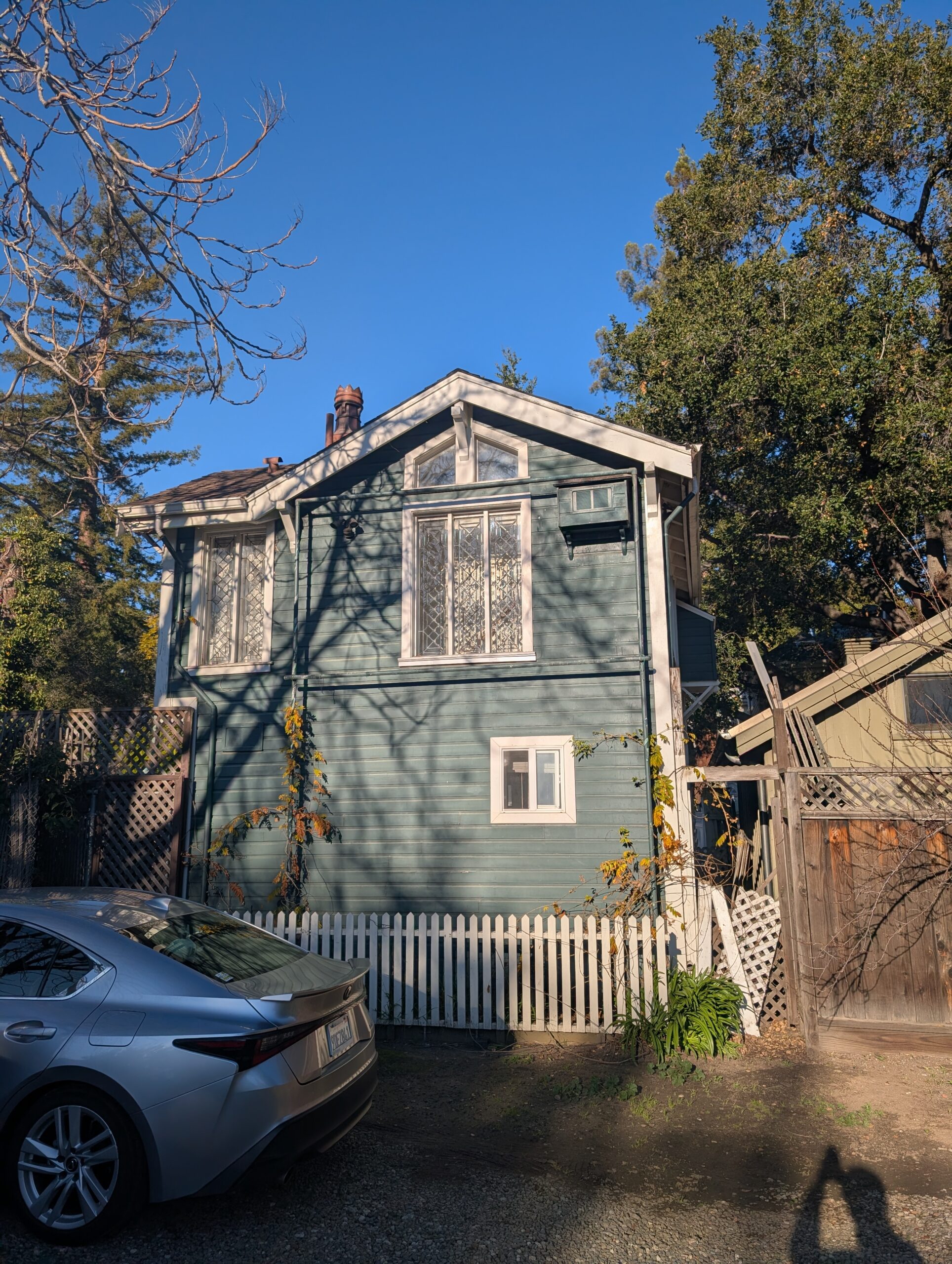
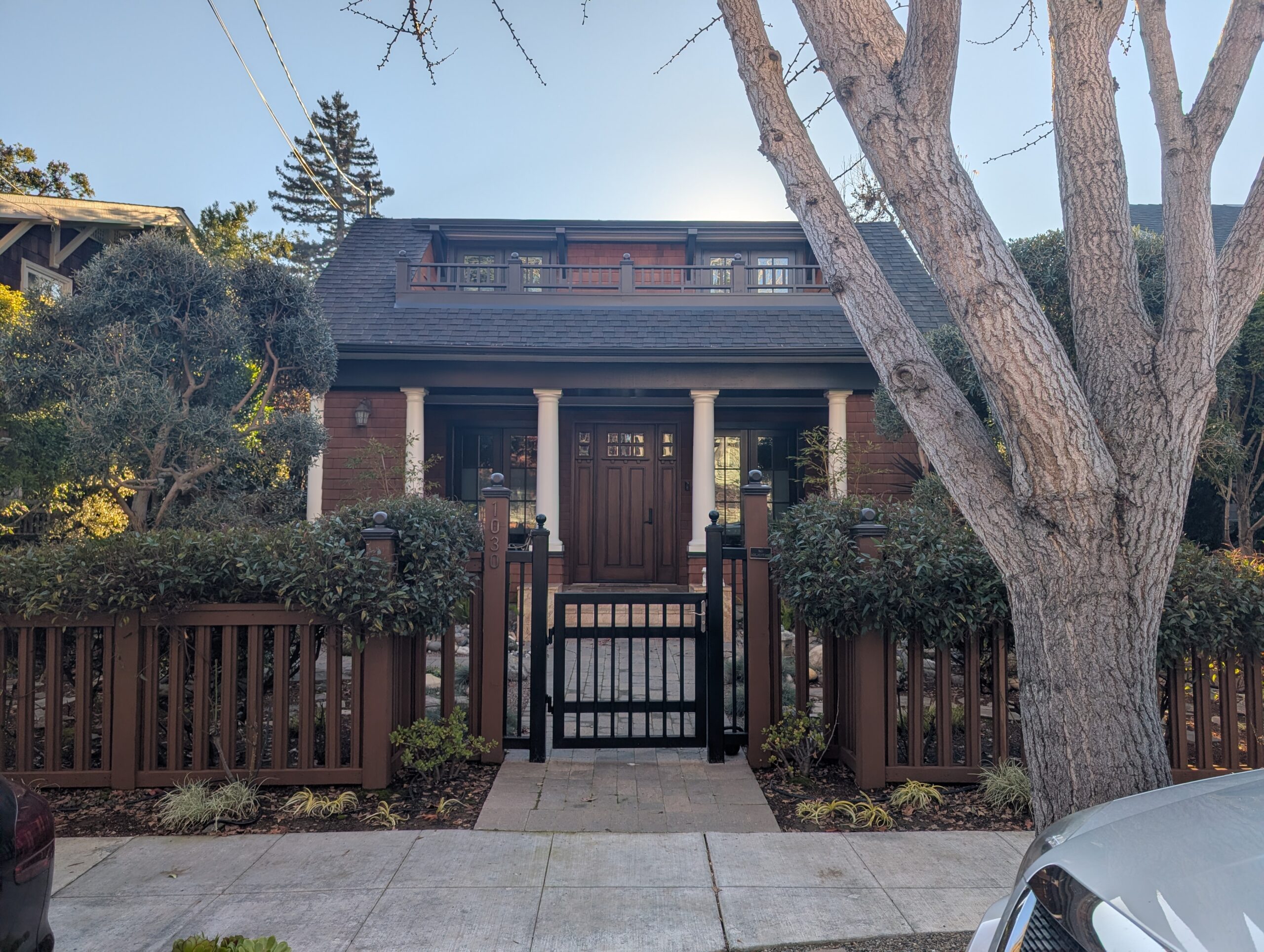
“This charming old house could fit in my backyard!”
Gotta stop at every Little Free Library along the way. At least half a dozen. And a table of free stuff where I picked up a black light for finding the mystery cat urine. (TMI? Sorry, toots!) And of course, making extra turns and rolling down red-lined cul-de-sacs. Is that a gorgeous house? I’ll need to stop and take a picture. Never went anywhere near Caltrain: things were too amazing out there. But as I neared the house and sunset, I decided some red routes can be saved for future adventures as I would prefer to get home before dark.
“Oh no wait, this is the house, scaled down, that I want to ask an architect to squeeze into an ADU!”
Total moving time? Around an hour fifteen.
Total elapsed time? Near an hour forty.
I gotta take the road less traveled. It is a habit my loved ones mostly tolerate. That’s how you can tell they love me.
Visiting the Upper Peninsula as a kid, we spent a lot of time relaxing on the beach. One time it was told to me that there was a fine collection of Model Ts at the bottom of the bay. “Why would you try to drive across the bay,” asked I? Well, you see, folks had been used to crossing the ice on foot or wagon–it saved a lot of time versus going the long way around in the snow. Unfortunately, combustion cars are heavier than some early owners reckoned, and the ice would give way.
Driving over ice on the road, I have learned, takes a special form of sangfroid. I have recently been thinking about the will and skill with which my people of the Upper Midwest drive over ice, and of how some folks are eager to tell their own version of a story without concern for facts.
I heard on that ultra-trendy news site, NPR, that Social Media is On The Way Out in 2026. What comes next? Well, I kinda like blogs. And I’m not the only one. Joan Westenberg wrote a kick-ass piece here: The Case for Blogging in the Ruins about the long view of how sharing knowledge works and how social media kinda pissed all over things … I’m going to just drop some excerpts …
Before social media ate the internet … blogs occupied a wonderful and formative niche in the information ecosystem. They were personal but public, permanent but updateable, long-form but informal. A blog post could be three paragraphs or thirty pages.
When I write a blog post, I’m writing for an imagined reader who has arrived at this specific URL because they’re interested in this specific topic; I can assume a baseline of engagement; I can make my case over several thousand words, trusting that anyone who’s made it to paragraph twelve probably intends to make it to paragraph twenty.
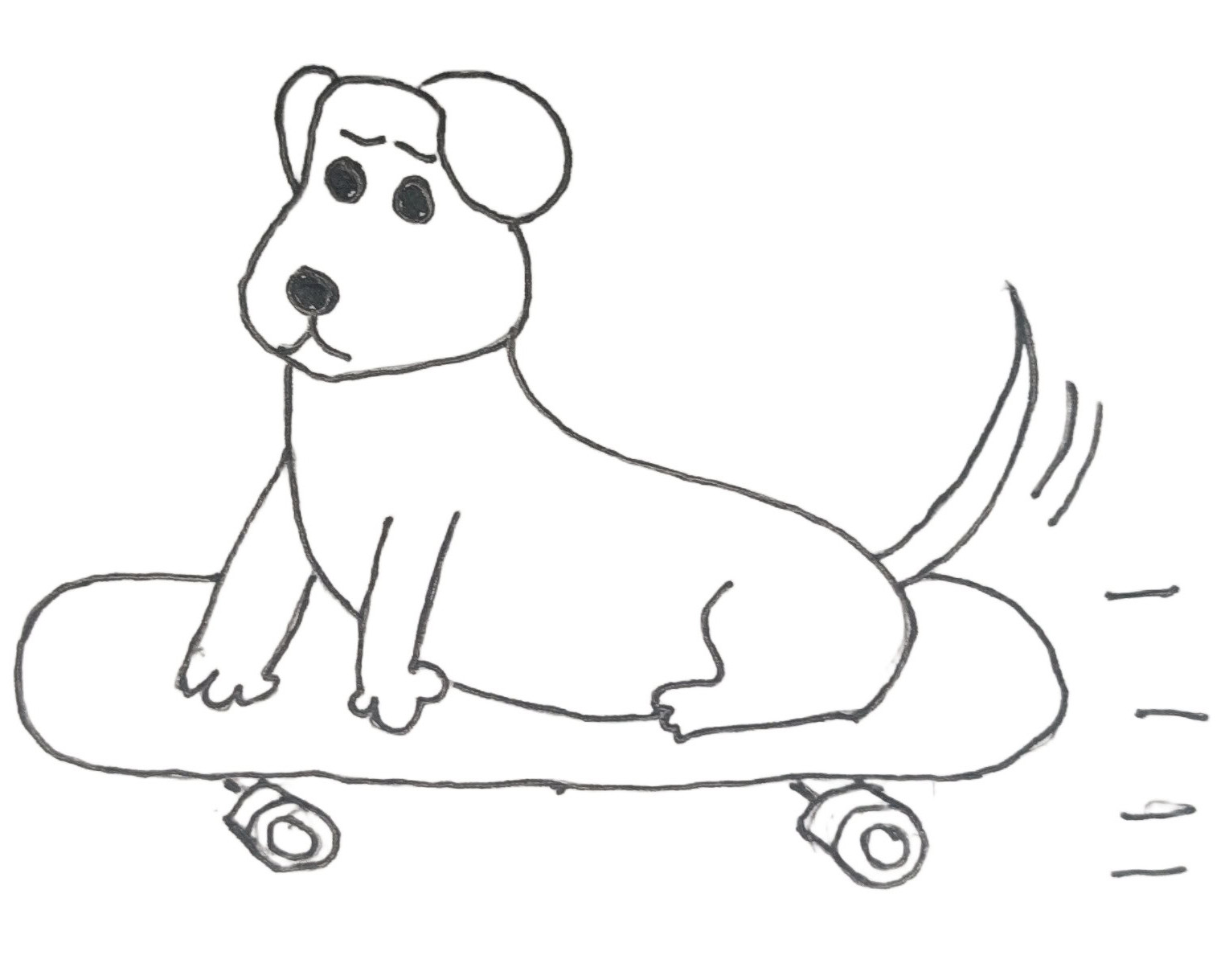
When I write for social media, I’m writing for someone who is one thumb-flick away from a video of either a hate crime or a dog riding a skateboard. … The format actively punishes nuance, which means that a thoughtful caveat reads as weakness and any acknowledgment of uncertainty looks like waffling.
She explains the origins of Essays: provisional attempts to try out ideas.
Social media flattens all of this into statements: Everything you post is implicitly a declaration. Even if you add caveats, the format strips them away. What travels is the hot take, the dunked-on screenshot, the increasingly-shitty meme, the version of your argument that fits in a shareable image with the source cropped out.
I keep thinking about how many interesting folks have essentially stopped writing anything substantial because they’ve moved their entire intellectual presence to Twitter or Substack Notes. … It’s like watching someone who used to compose symphonies decide to only produce ringtones.
The capacity for hot zingers like the symphonies to ringtones analogy are maybe something we can thank our social media experiences for.
She’s got some advice on what makes a good blog and how to get started, and how to address “the Discovery Problem” with the observation that blog entries get indexed and surfaced over time, where social media disappears. I have to admit, though: since Social Media came about, this humble blog has received about zero comments over the past decade. Kind of a bummer. But the quiet exploration over here in my own space beats The Monetize Everything Hate Machine.