To Emeryville
We started with brunch, after a walk of less than a mile downtown. We ate at our usual brunch spot. The lady there who is the soul of the operation but not the owner will be around some weeks more, before she moves to an affordable part of California with her new husband. We rode Caltrain a few stops down to Santa Clara and had nearly two hours until the Capital Corridor train was to arrive. Fortunately, it was Saturday, and the Historical Railroad Society was open. Bonus: it was their Open House weekend. The volunteers held our luggage in the Historic Waiting Room. We gazed at the model railroads, the boys with less sustained interest than me. Plenty of time to check out the signal tower. “You know, Older Son has toured the interlocking before, strapped to my chest.”
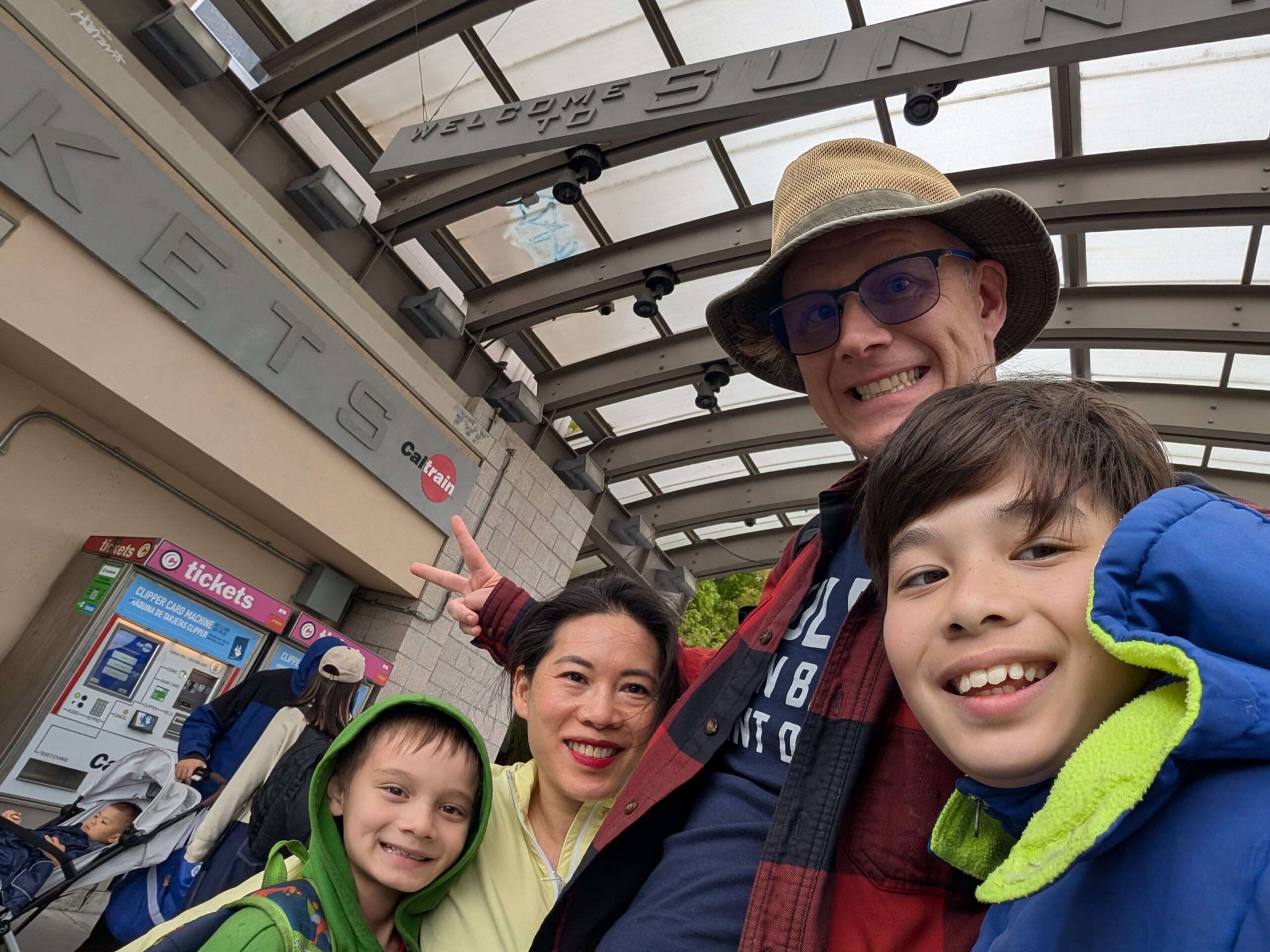
Ready to board Caltrain, the first leg of our adventure!
Signal towers are some impressive under-rated problem-solving. Train lines come together at junctions, and you need to ensure they don’t crash into each other. The signal tower is built high enough to look things over. And a siding is added so trains can pass. A little yard. Now there are a dozen switching points for half a dozen tracks and they all need to be coordinated correctly and consistently, so they get tied together with cables, such that if one switch between tracks is thrown, the matching switch is also thrown, and the appropriate cables that control the semaphor signals are pulled to the correct positions so the engineers know if they need to stop, or if they are allowed to go.
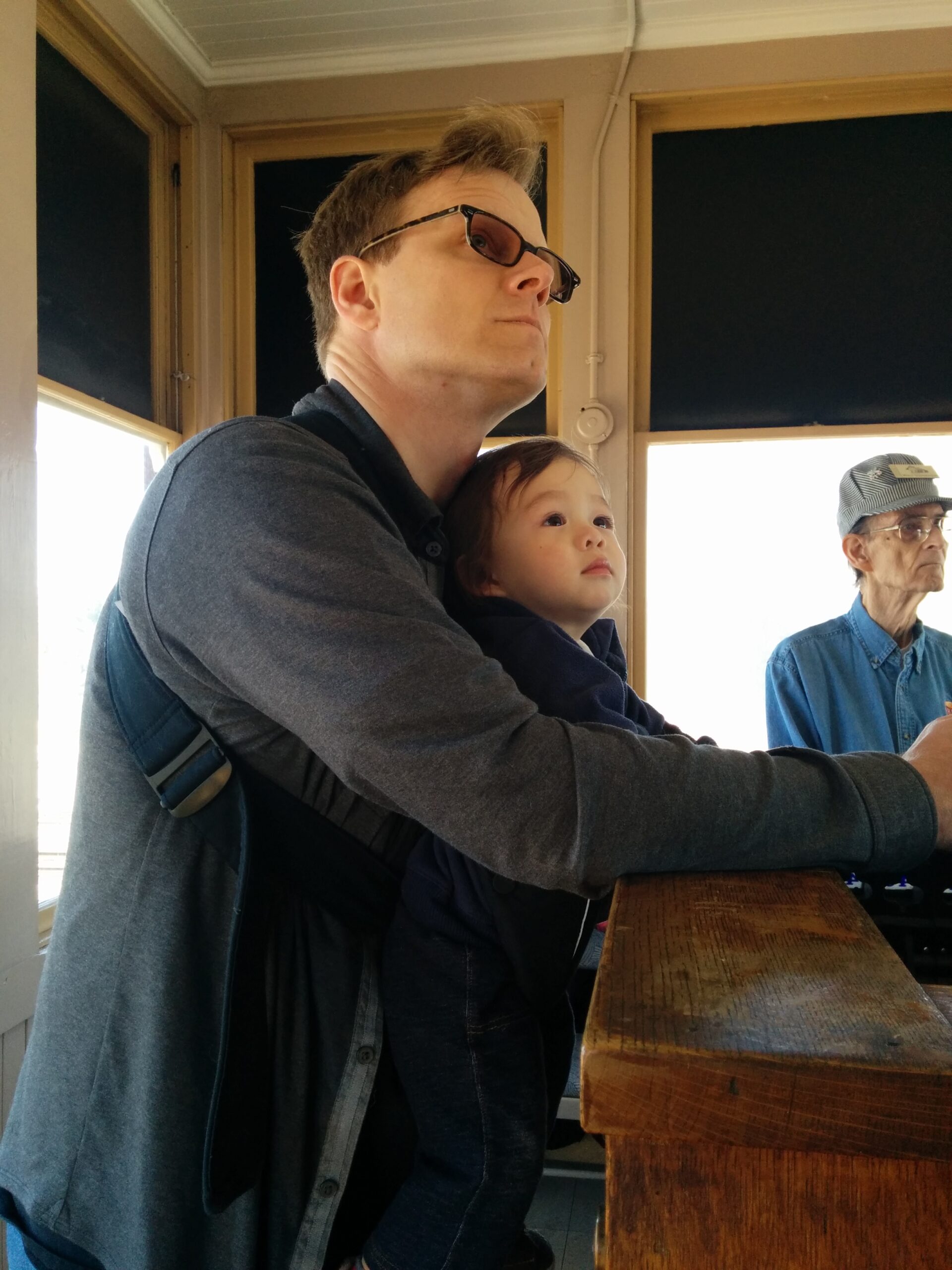
Touring the Santa Clara Signal Tower with Older Son, in 2014.
The earliest versions were “Armstrong” systems, so-called because it took strong arms to pull the levers that pulled the cables to correctly set the switches and signals. At Santa Clara, they had a more modern 1920s signal tower, where switches activated electrical relays that triggered the switches and signals. The regular trains ran through on schedule, special trains had orders made up on the typewriter in triplicate thanks to the miracle of carbon paper, and work went on until the work of the signal tower was replaced by a central computerized operations center in 1993, and handed over to the Historical Preservation folks for historical preservation.
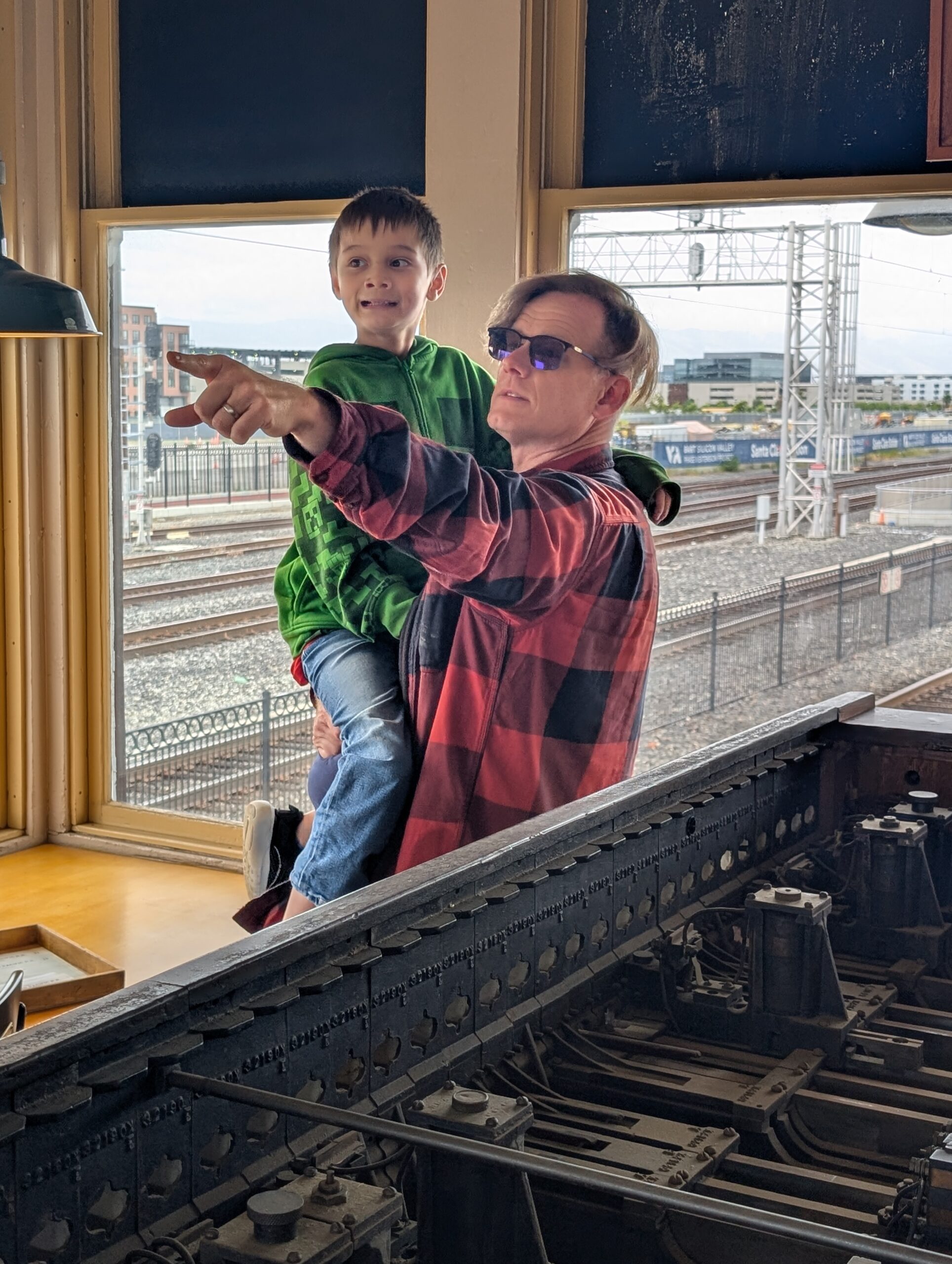
Touring the Santa Clara Signal Tower with Younger Son, in 2026.
Appreciating the sweep of history I made mention of the future which we hope will eventually arrive: California’s High Speed Train system. It will run through the Santa Clara junction, passing below the old preserved tower. The guide got a glimmer in his eye, and said that what isn’t said enough is that we were standing over the first operational high-speed segment. If you took a high speed trainset and set it on the tracks here, it could pop up its catenary to Caltrain’s overhead wires and run between San Jose and San Francisco as Caltrain currently does. Today trains can run up to 79 miles per hour. With improvements to the signaling and tracks that will come along with the High Speed Rail construction, our new Caltrains are rated to 110 miles per hour. They ran faster than that when they were tested in Pueblo, Colorado.
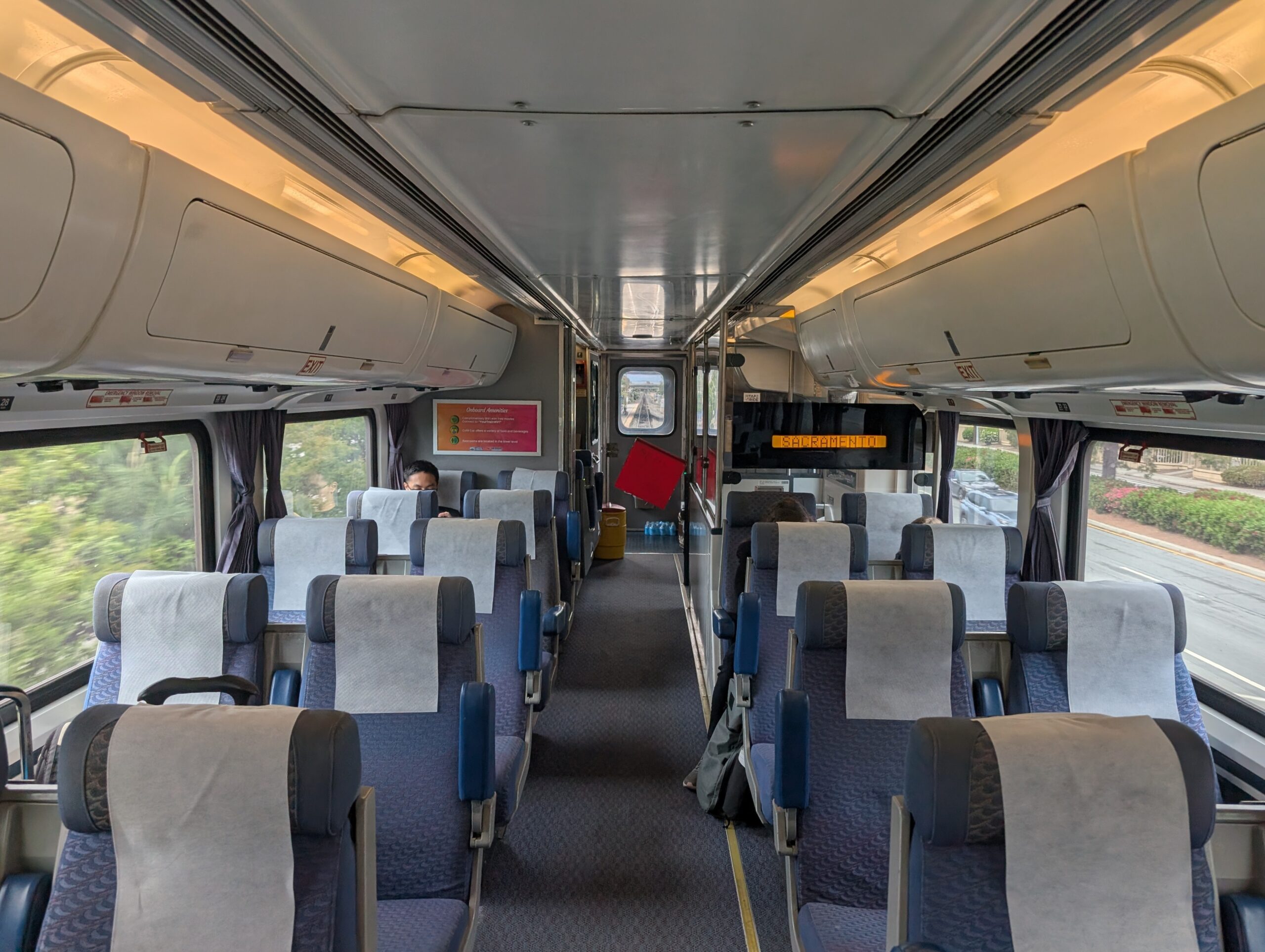
The view from inside a Capital Corridor train, bound for Sacramento.
The Sacramento train arrived, to take us on the branch that has no pretensions of High Speed travel. North through the salt ponds. Why are they red, asked Younger Son? The Internet suggests that the algae that most enjoy the saltiest water are red. We cruised through the industrial backyards of the Bay Area, where all the cool equipment gets stored amid the graffiti. There seem to be fewer homeless folks camped along the way than there were on my last ride, two years ago. My hunch is that two things are true: in some cases we have done decent work of helping people move up from homelessness, and also that we have sent the cops in to shove The Problem further out of sight. Which is more true I could not tell you.
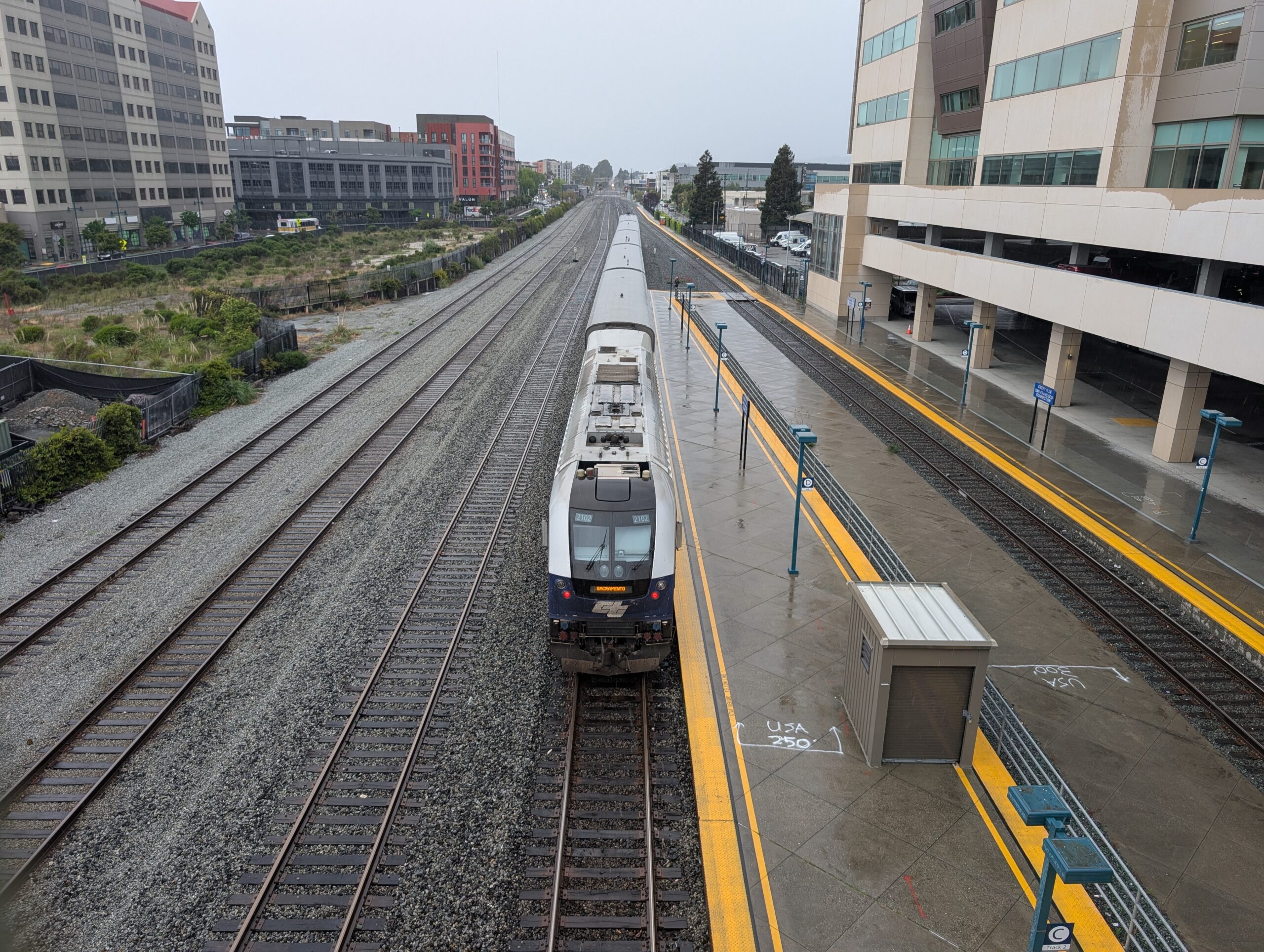
Our Sacramento train viewed from the overpass at Emeryville. The rightmost track is where we would board the California Zephyr the next morning.
Off at Emeryville and over the tracks to the hotel where we met Grandma. For a few dollars more, you can book a Bay View, but I correctly inferred that for a few dollars less, I could book a Train View. And the train view was fantastic: the Capitol Corridor stopped by at a regular cadence, then the Amtrak Coast Starlight, as well as freight trains. Sometimes in the night the horns heard softly on the fifth floor would prompt me to look out through the picture window and smile. The hotel has a restaurant but it was closed, so we walked to the Food Court across the street. Oakland offers no shortage of variety in cuisine, but the vendors were mostly consistent in serving their respective foods in garbage, collected in bins. The burger place flaunted convention, serving Younger Son and I drinks in used glass tumblers, incurring the endless toil of washing.

Comment
Tiny Print:
<a href="" title=""> <abbr title=""> <acronym title=""> <b> <blockquote cite=""> <cite> <code> <del datetime=""> <em> <i> <q cite=""> <s> <strike> <strong>